

The Case for Staying Put: Slow Travel for Families Who Only Get 10 Days
You have ten days. Maybe twelve if you’re lucky and going outside of the school year. And somewhere along the way, someone convinced you that the best way to use that time is to see as much as humanly possible: three countries, five hotels, a train, two flights, and a rental car you’ll return with a full tank and an empty patience reserve. Sound familiar?
We’re making the case for the opposite. This is what slow travel for families actually looks like, and why it works better than a multi city itinerary when your vacation time is limited.
Why a Packed Itinerary Doesn’t Actually Work
A ten day trip that hits four cities sounds impressive on paper. In practice, here’s what it actually looks like: two of those days are travel days. Another day and a half gets swallowed by check-in windows, packing and unpacking, and figuring out where anything is. That leaves you with roughly six real days spread across four places, which means you don’t get more than a day and a half of your actual attention in any one of them.
You didn’t take a vacation. You took a very expensive scavenger hunt.
What a One Home Base Vacation Actually Buys You
When we build a family trip around one home base, or two at most, you get the authentic, local experience you asked for. You stop being a tourist passing through and start being a guest who’s actually there. You get to know the woman who runs the market stall two streets from your hotel. Your kids figure out which beach has the best tide pools instead of glimpsing five different beaches from a bus window. You have an actual lazy morning instead of an itinerary that starts at 7am every single day.
This is the whole idea behind slow travel, and it’s not a trend we’re chasing because it’s having a moment. It’s how we’ve always believed family vacations should work for people with real, limited time.

Why This Matters Most When It’s Your Only Trip of the Year
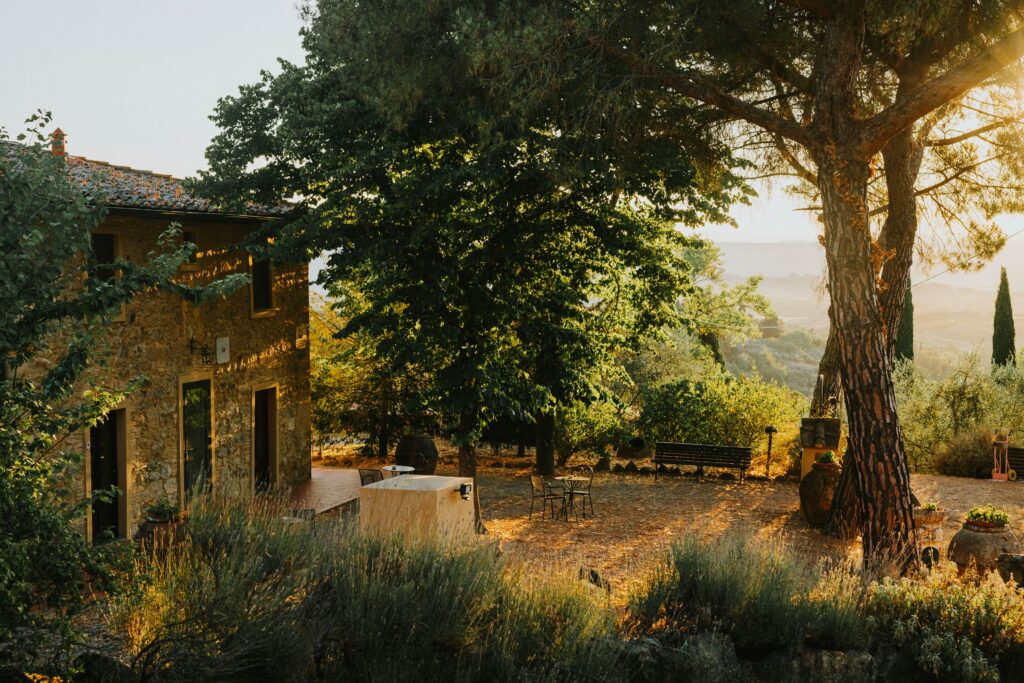
If your vacation this year is the one trip you’re taking, the one you’ve been outsourcing everything else in your life to protect time for, it deserves better than being split six ways. One incredible week in Tuscany, with time to slow down, beats a highlight reel of Rome, Florence, Venice, and the Amalfi Coast crammed into the same window.
The itinerary that looks “smaller” on a map is often the one families come home from actually rested.
Slow Travel Itinerary Examples: Crete, Puglia, and the Cotswolds
A few examples of how we’ve built this for families with the same ten to twelve day window you have:
One island, fully explored. Rather than island hopping through Greece, we’ll build a week around a single base like Crete, with day trips by boat and by car for variety, so you unpack once and still get to see the water change color from three different beaches.
A countryside home base with day trips radiating out. In Puglia or the Cotswolds, this means one beautiful property, and drivers who take you out to a vineyard, a market town, or a cooking class, then bring you home to the same bed every night.
Slower doesn’t mean smaller. We’re not talking about doing less. We’re talking about doing fewer things, better, with private guides who know the place well enough to get you past the line, the reservation, or the closed door that a rushed itinerary never has time for.

The Part Nobody Tells You
The families who come back from these trips describing them as “the best one yet” are almost never the ones who saw the most. They’re the ones who tell us about the specific afternoon nothing was scheduled. The dinner ran three hours because no one had anywhere to be. The morning the kids didn’t want to leave the pool, so they didn’t.
You have ten days. Let’s spend them somewhere, not everywhere.
Plan your slow travel trip and let’s talk about where.
Frequently Asked Questions
What is slow travel? Slow travel means building a trip around one home base, or two at most, instead of moving between multiple cities or countries. It trades a packed sightseeing schedule for more time in fewer places, so you actually get to experience where you are instead of just passing through.
How many destinations should a 10 day family trip include? For a ten to twelve day trip, one home base with day trips is usually the better structure. Two home bases can work if they’re close together, but three or more destinations tend to eat your real vacation time with travel days and check-ins.
Is slow travel more expensive than a multi city trip? Not necessarily. Fewer transfers, fewer hotel check-ins, and fewer flights often mean the budget goes further into the experience itself, private guides, better rooms, a driver for the week, rather than into logistics.
What’s the best home base for a family trip to Italy? It depends on what your family wants out of the trip. Tuscany and Umbria work well for families who want vineyards, cooking classes, and countryside days. Puglia suits families who want a slower coastal pace with day trips to whitewashed towns. We build this around your family’s specific pace, not a one size fits all answer.